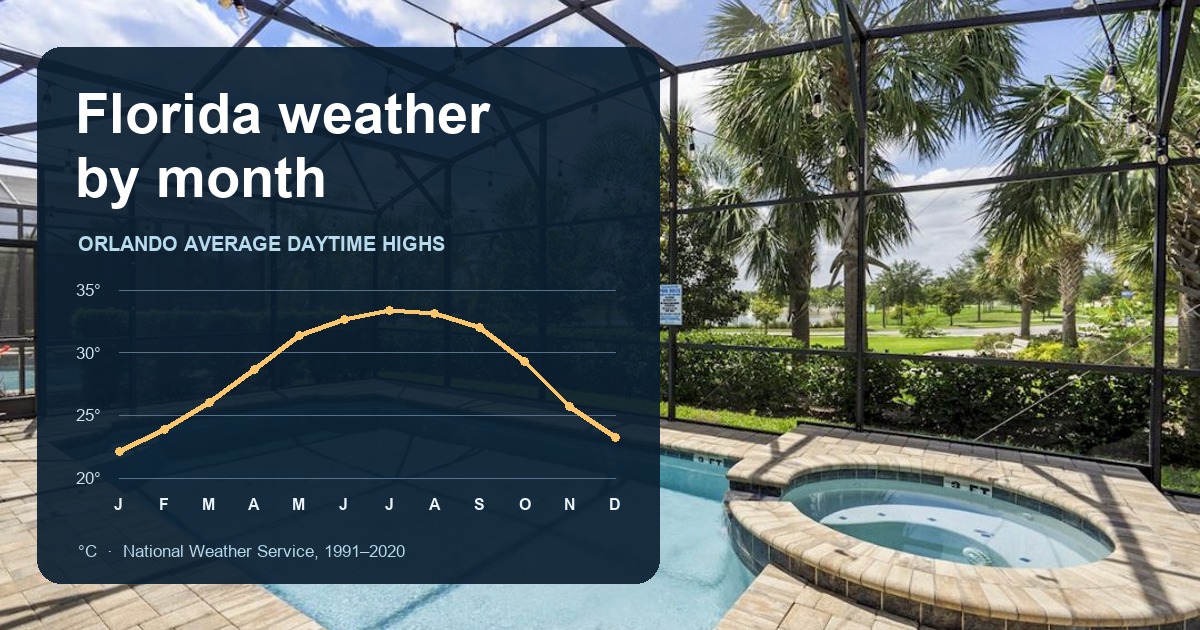
Florida weather can shape your holiday plans, from what to pack for a day at Disney to whether it’s worth heating the villa pool. In Orlando, winter days are generally mild with cooler evenings. Summer is hot and humid, and June through September are the wettest months on average.
Orlando Weather by Month
The figures below are the 1991–2020 climate averages for Orlando. They’re a useful starting point for holidays in Kissimmee, Davenport and the Disney area. The low and high are averages for overnight and daytime temperatures, and rainfall is the average total for the whole month. Check the local forecast before you travel, especially if you’re also visiting the Gulf Coast, South Florida or the Panhandle.
Orlando monthly temperature and rainfall averages
| Month |
Average low |
Average high |
Monthly rainfall |
| January |
10°C (50°F) |
22°C (72°F) |
63 mm (2.48 in) |
| February |
11°C (52°F) |
24°C (75°F) |
52 mm (2.04 in) |
| March |
13°C (56°F) |
26°C (79°F) |
77 mm (3.03 in) |
| April |
16°C (61°F) |
29°C (84°F) |
66 mm (2.58 in) |
| May |
19°C (66°F) |
31°C (88°F) |
102 mm (4.02 in) |
| June |
22°C (72°F) |
33°C (91°F) |
204 mm (8.05 in) |
| July |
23°C (73°F) |
33°C (92°F) |
189 mm (7.46 in) |
| August |
23°C (74°F) |
33°C (92°F) |
195 mm (7.69 in) |
| September |
22°C (72°F) |
32°C (90°F) |
162 mm (6.37 in) |
| October |
19°C (66°F) |
29°C (85°F) |
88 mm (3.46 in) |
| November |
15°C (58°F) |
26°C (78°F) |
45 mm (1.79 in) |
| December |
12°C (53°F) |
23°C (74°F) |
63 mm (2.48 in) |
Source: National Weather Service climate averages for east central Florida. Temperatures and millimetres are rounded.
What to Wear in Florida by Season
- December to February: Pack T-shirts for mild afternoons, plus long trousers, a jumper and a light jacket for early starts and evenings. Bring swimwear if your villa or resort has a heated pool.
- March to May: Pack shorts, breathable tops and comfortable walking shoes. A light layer is still useful in March. By May, a packable rain jacket or poncho is worth keeping in your park bag.
- June to September: Choose loose, lightweight clothing that dries quickly. Bring a sun hat, sunglasses, sunscreen, a poncho and a spare pair of socks for long days at the parks.
- October and November: Start with warm-weather clothes and add a light layer for evenings, especially in November. Keep a rain layer handy in October.
Our year-round packing tip: Keep a light jumper in your bag. We find air-conditioned restaurants and cinemas can feel quite cold, even when it’s hot outside.
How to Stay Comfortable in the Florida Heat
- Drink water regularly. Bring a refillable bottle and sip throughout the day. If you’re sweating heavily for several hours, an electrolyte drink can help replace some of the salts you lose. Water is usually enough for shorter outings.
- Plan a cool break. Start outdoor activities early and use the hottest part of the afternoon for lunch indoors, an air-conditioned attraction or a break back at the villa.
- Check the heat index and rain forecast. Humidity can make the day feel hotter than the temperature suggests. Leave room in your plans for showers and head indoors if you hear thunder.
For more on hydration in the heat, see CDC guidance on water and electrolytes.
When Is Villa Pool Heating Worth It?
Pool heating is usually most useful from October to March, when cooler nights can bring the water temperature down. The weather, how much sun the pool gets and how warm you like the water all matter. In our experience, most villa owners set their pool heaters to around 82–87°F (28–31°C). That’s the target setting. The water can be cooler after a cold night. Ask the owner what temperature they aim for and whether heating is available for your dates.
Watch for unusually cold nights. Orlando can occasionally drop below freezing (32°F / 0°C) overnight in January and February, even though average overnight lows are well above freezing. If a very cold night is forecast and your villa has a pool blanket, it’s especially worth putting it back on after the last swim to help retain heat overnight.
Ask if the villa has a pool blanket. Many homes no longer provide one, but if yours does, keeping it on overnight in the cooler months can make a big difference. A roller makes the blanket easier to put on and take off. Without a roller, it can be awkward to remove and put back, but it’s worth covering the pool again after the last swim to help keep the water warm. It’s usually easier with two people: one person on each side can lift and fold the blanket together as they take it off. On a cool night, an uncovered pool can lose a lot of heat and may take much of the next day to warm back up. Follow the owner’s instructions and remove the blanket completely before anyone swims.
How much heat can a pool lose overnight? The U.S. Department of Energy identifies evaporation as the biggest source of energy loss from swimming pools. As water evaporates, it carries heat away. A floating blanket slows evaporation and helps the pool stay warmer until morning. The overnight temperature drop varies with the air temperature, wind and how warm the water was to begin with.
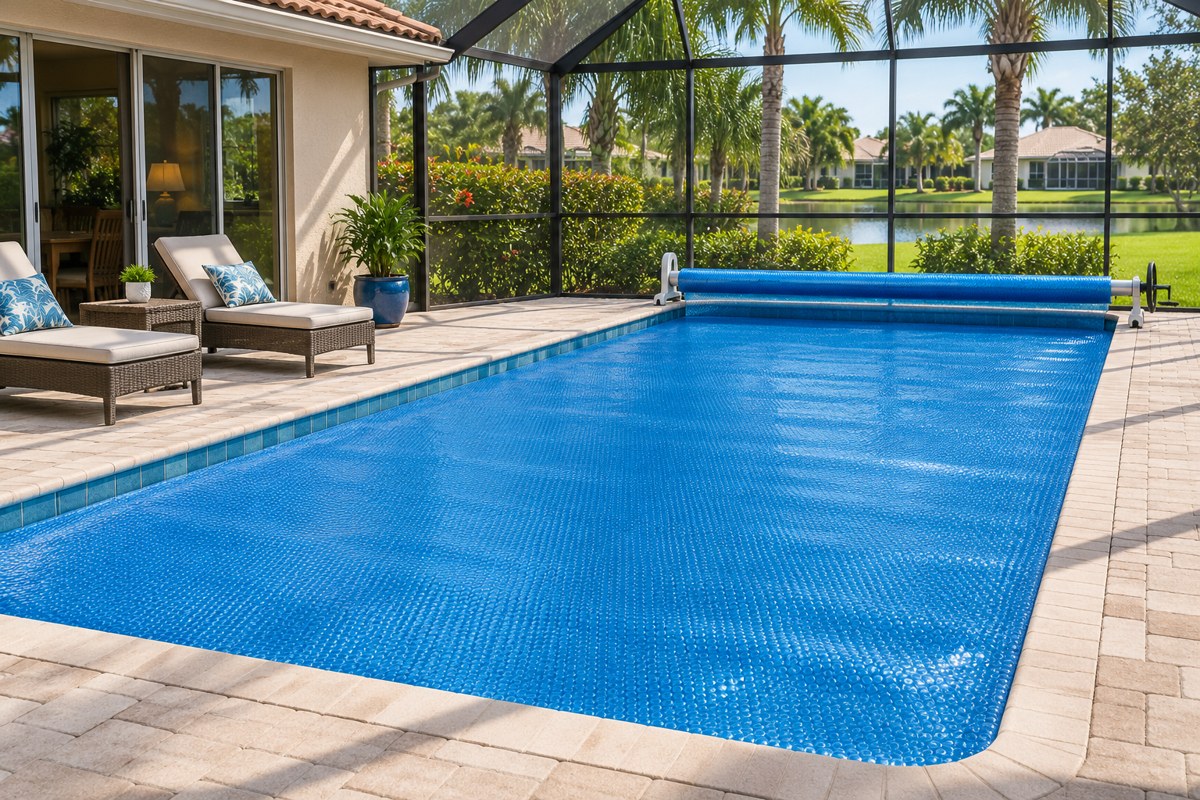
Illustration of a floating pool blanket.
Planning your stay? Browse Orlando villas to rent or see our Florida Gulf Coast villas.